Hook: A Data Paradox
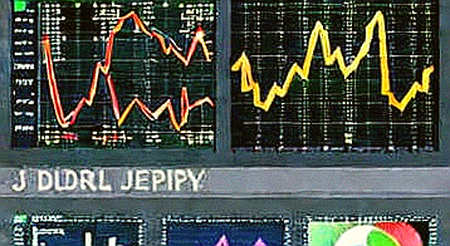
Over the past 7 days, a single API call from OpenAI rendered a probability chart for the upcoming World Cup match. The source: Kalshi, a CFTC-regulated prediction market. No smart contract. No oracle. No on-chain settlement. The chart appears in ChatGPT search, displaying market-implied probabilities aggregated from thousands of user bets. The irony is sharp: the most advanced AI model is now parroting a centralized, Kalshi-controlled order book—while decentralized alternatives like Polymarket and Augur sit idle. This isn't a technical breakthrough. It's a signal about where the industry is headed.
This integration is a quiet admission: real-time, high-stakes data still lives outside the blockchain. And AI is hungry for it.
Context: The Integration Mechanics
OpenAI announced last week that ChatGPT search will now display Kalshi's prediction market data for select sporting events. Users see a win probability chart derived from market prices, but cannot trade or place bets directly. The data flows via a standard REST API, likely cached every few minutes to avoid rate limits. The frontend uses a lightweight charting library – probably Chart.js – rendering probabilities without any model inference overhead.
Kalshi is a registered derivatives exchange, operating under CFTC oversight. Its markets are legal in the U.S., unlike many crypto-based prediction markets that face regulatory uncertainty. The partnership gives OpenAI a differentiated data layer: Google shows weather, stocks, and scores, but not live gambling probabilities. This is a new vector.
But the underlying infrastructure is painfully trivial. No blockchain. No transparency. No composability.
Core: What This Means for the DeFi Stack
As a Layer2 researcher, I see this as a missed chance. The integration could have been a showcase for decentralized oracles. Chainlink handles similar data feeds – sports outcomes, election odds – for DeFi protocols. But OpenAI chose a gatekept API over an open oracle network. Why? Compliance. Kalshi's regulated status gives OpenAI a legal safe harbor. Decentralized oracles, while technically superior, still operate in a regulatory grey area.
This reveals a deeper truth: prediction markets are money legos only when they are trustless. Kalshi's data is a black box. No one outside the exchange can audit the order book, verify fill conditions, or detect front-running. For DeFi builders, this is a step backward. We spent years fighting for verifiability; now AI is reintroducing opacity.

Consider composability. If Kalshi's data were on-chain, a lending protocol could use market probabilities as a collateral oracle. Or a derivatives contract could settle against Kalshi's outcome. But the integration is read-only. The data enters ChatGPT's walled garden and stays there. Yield is just risk wearing a disguise – and the risk here is that AI platforms become the new gatekeepers of market information, undermining the very transparency blockchain promises.
I recall my 2020 analysis of DeFi composability risks, where I mapped liquidation cascades between MakerDAO and Compound. The key insight was that oracles were the single point of failure. Today, that failure point is Kalshi's API endpoint. If it goes down or is manipulated, ChatGPT displays incorrect probabilities, influencing millions of users. That's systemic risk without a circuit breaker.
Contrarian: The Real Threat to Decentralized Markets
The bullish narrative says this legitimizes prediction markets. More users will discover Kalshi, maybe even venture into DeFi alternatives. I disagree.
The contrarian view: OpenAI's partnership will centralize prediction market liquidity. Users will stay on Kalshi because it's the source of truth for ChatGPT. Decentralized platforms like Polymarket, which already suffered from low liquidity after the 2024 regulatory crackdown, will bleed users further. The network effect of being the default data source for the world's most powerful AI is immense.
Moreover, the integration subtly validates the CFTC's jurisdiction over prediction markets. If the largest AI company complies with commodity regulations, other AI firms will follow. The door for truly permissionless prediction markets just closed a little tighter.
There's also a data manipulation angle. Kalshi's markets are relatively thin. A single trader with $50,000 can skew probabilities for obscure events. OpenAI has no incentive to filter such anomalies – it just displays what the API returns. In my 2022 audit of Terra's depegging mechanism, I saw how a feedback loop between market data and user behavior caused collapse. Here, the loop is slower, but the mechanism is analogous: ChatGPT shows a probability, users react, Kalshi prices move, ChatGPT updates. Complexity is the enemy of security, especially when the data source is opaque.
Takeaway: The Fork in the Road
OpenAI took the easy path: a compliant API call over a trusted centralized partner. The path not taken was to integrate Chainlink or build a custom oracle on-chain, accepting regulatory risk for the sake of verifiability. This decision will shape the next phase of AI-blockchain convergence.
Will future AI agents query on-chain data directly, or will they rely on a small set of licensed APIs? The answer depends on whether decentralized oracles can offer the same legal comfort without sacrificing transparency. Until then, the real competition isn't between AI and search – it's between centralized trust and decentralized truth.