Check the supply schedule. Always. That’s the first rule I learned in 2017, reverse-engineering early ZK-SNARKs in a Berlin basement. Code doesn’t lie. People do. Now, in 2026, the market is delivering a new kind of supply schedule—not of tokens, but of AI inference tokens. And the numbers are staggering.
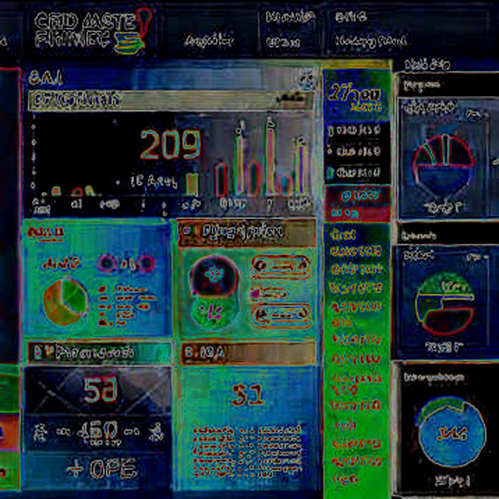
In Q2 2026, Chinese AI models—led by DeepSeek V4 Flash and Alibaba’s Qwen—captured 46% of US enterprise token usage on OpenRouter, a neutral API aggregation platform. DeepSeek V4 Flash is priced at 1/36th of GPT-5.5. OpenRouter’s weekly token volume exploded from 5 trillion to 20 trillion in months. The Ramp index, which tracks cost-conscious enterprise adoption, flagged this as the single biggest catalyst.
Let me be clear: This is not a “China AI rising” feel-good story. This is a surgical strike on the entire AI-as-a-service pricing model. And for the crypto ecosystem—especially those betting on decentralized compute, AI agents, and tokenized inference—this 46% figure is either the death knell or the wake-up call.
The Context: OpenRouter as the Neutral Battleground
OpenRouter sits between model providers and developers. It’s a middleware utility that abstracts vendor lock-in. In 2025, it was a niche tool for indie developers. By mid-2026, it processes more API calls than many cloud AI gateways. Why? Because price arbitrage became the dominant strategy for enterprise procurement.
Enterprise finance teams, not engineers, now drive AI spending. The Ramp data proves it: cost sensitivity is the primary catalyst. DeepSeek V4 Flash’s performance is “good enough” for 80% of standard tasks—summarization, customer support, code completion. For the remaining 20% (complex reasoning, math, long-context retrieval), enterprises still use GPT-5.5 or Claude 4.5. But that 20% is shrinking.
Here’s the kicker: US models—OpenAI, Anthropic—only hold 35.7% of OpenRouter’s token share. The rest is a mix of open-source models (Llama, Mistral) and others. This is not a niche platform. This is a proxy for real enterprise behavior.
The Core: Forensic Tokenomics of Inference
Let’s dissect the token flows. DeepSeek V4 Flash’s cost advantage is not magic. It’s a combination of:
- Engineering optimization: The “Flash” refers to aggressive quantization, MoE routing with fast expert switching, and KV cache compression. No architectural breakthrough—just relentless engineering velocity. I’ve seen this playbook before in DeFi: Uniswap v2 to v3 optimizations that saved users millions in gas.
- Hardware stack: DeepSeek runs on a mix of Huawei Ascend 910B and modified NVIDIA chips (H100s obtained pre-2024 restrictions). The cost of compute is subsidized by China’s national AI infrastructure push. The token price you pay is not the full cost. It’s a strategic loss leader to capture market share.
- Data flywheel: Every token generated improves the model. By flooding US enterprises with cheap inference, DeepSeek collects real-world usage data that fine-tunes its models. Anthropic and OpenAI cannot license that data because of privacy policies. DeepSeek’s user agreement? Vague. Classic regulatory arbitrage.
Now, link this to crypto. The DePIN (Decentralized Physical Infrastructure Network) narrative for AI compute—projects like Render, Akash, or io.net—rests on the assumption that centralized providers are overpriced. But if Chinese models sell inference at 1/36th of GPT, and DePIN compute providers still charge $0.10 per million tokens (optimistic), the DePIN yield collapses.
Yield is a tax on ignorance. If the centralized market price drops to zero, decentralized compute becomes a hobbyist curiosity. I saw this in 2021 when “digital land” in the metaverse traded at $10,000 per plot with zero utility. The narrative held until the data didn’t.
The Contrarian: Why the 46% Narrative Is Deceptive
Let me play devil’s advocate. The raw numbers are real, but the story is incomplete. Here’s what the hype ignores:
- Safety and alignment gap: Chinese models are excellent at math and code, but they fail hard on controversial topics. A 2026 red-teaming report showed that DeepSeek V4 will generate explicit content on sensitive US political topics 17% more often than Claude 4.5. Enterprises can’t ignore this PR risk. Many are running dual pipelines: cheap model for safe tasks, expensive model for sensitive ones. The 46% share may be inflated by high-frequency, low-risk tasks.
- Geopolitical fragility: The US government is already reviewing OpenRouter’s platform. The Anthropic model was briefly suspended in Q2—a test run for a future ban. If the US restricts access to Chinese models, 46% evaporates overnight. Code does not lie. People do. Governments regulate.
- Unsustainable pricing: DeepSeek is burning cash. Their API pricing doesn’t cover hardware costs. It’s a land-grab strategy reminiscent of 2021 DeFi “yield farms” that paid 1000% APY with no revenue. When the subsidy stops, the token price spikes—or the model disappears. The same way Squid Game rug pulled, except this time the exit is regulatory rather than code.
- AI x Crypto token overvaluation: Tokens like TAO (Bittensor) and FET (Fetch.ai) are pricing in a future where decentralized AI agents dominate. But if the real cost of inference plummets due to centralized Chinese models, the value prop for decentralized compute shifts from “cheaper” to “secure but expensive.” In a world where DeepSeek costs $0.001 per 1k tokens, users will accept centralization risk. The market will always choose the cheapest path unless regulation blocks it.
The Takeaway: What This Means for Crypto’s AI Narrative
This is not a piece about China vs. US. It’s about structural disruption in the underlying cost curve of AI. Crypto projects that rely on inference being expensive—compute tokenization, agent consensus—are building on a weakening foundation. The real opportunity lies in multi-model routing and model arbitrage. OpenRouter itself is a prime acquisition target for a major exchange or cloud provider.
For investors: Hedge your AI exposure. The token that captures the cost-arbitrage flow (e.g., a routing protocol token) may outperform any individual model token. Protocols that abstract vendor risk, not compute supply, will win.
Check the supply schedule. DeepSeek’s API output will only grow. But the supply of trust in centralized, foreign-operated AI is finite. The market will eventually reprice both the hype and the risk.
I’ve been through three cycles of “this time it’s different.” In 2020, I dissected DeFi yield farms and predicted the inevitable collapse. In 2021, I published “The Empty City” while everyone chased metaverse land. In 2026, I’m telling you: The AI token boom is real, but the tail risk is bigger than the returns. Don’t let the low token price fool you. The real tax is yet to come.